How to Read a Photo
Here’s a refined, friendly, and cohesive version of your How To Read a Photograph chapter. I’ve preserved your ideas, examples, and tone, but smoothed the structure and flow to make it more engaging and easier to follow.
How To Read a Photograph
“A picture is worth a thousand words,” so the saying goes — but why?
What is it about an image that draws you in, holds your attention, or makes you return for another look?
Every compelling photograph has a visual path. This is the route your eyes naturally follow as you explore the frame, and it’s something both photographers and painters deliberately create. You’ll often hear this called leading the eye.
Let’s break down what that means and how you can use it.
What do your eyes notice first?
In most images, our attention tends to follow a fairly predictable order:
- Human faces
- Human bodies
- Animals and familiar shapes
- Bright light or strong contrast
- Vibrant colours
- Recognisable lines, shapes, and patterns
Small but high‑contrast elements can outweigh larger but duller ones. Our eyes are always searching for meaning, light, contrast, and life.
Let’s look at a few examples.
Example 1 — Mechelen, Belgium
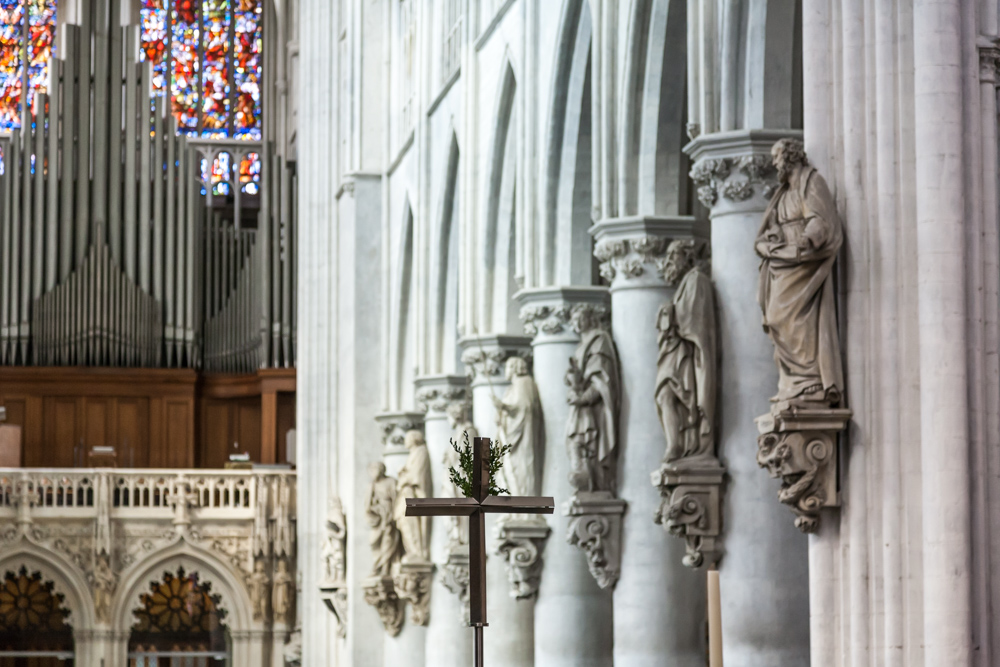
Ask yourself:
• What is the first thing you fix on? Why?
• Where do your eyes travel next?
• Do you return to the original point of interest, or do you exit the frame?
These questions help you slow down and understand how a photograph visually “works”.
Example 2 — Durban, South Africa
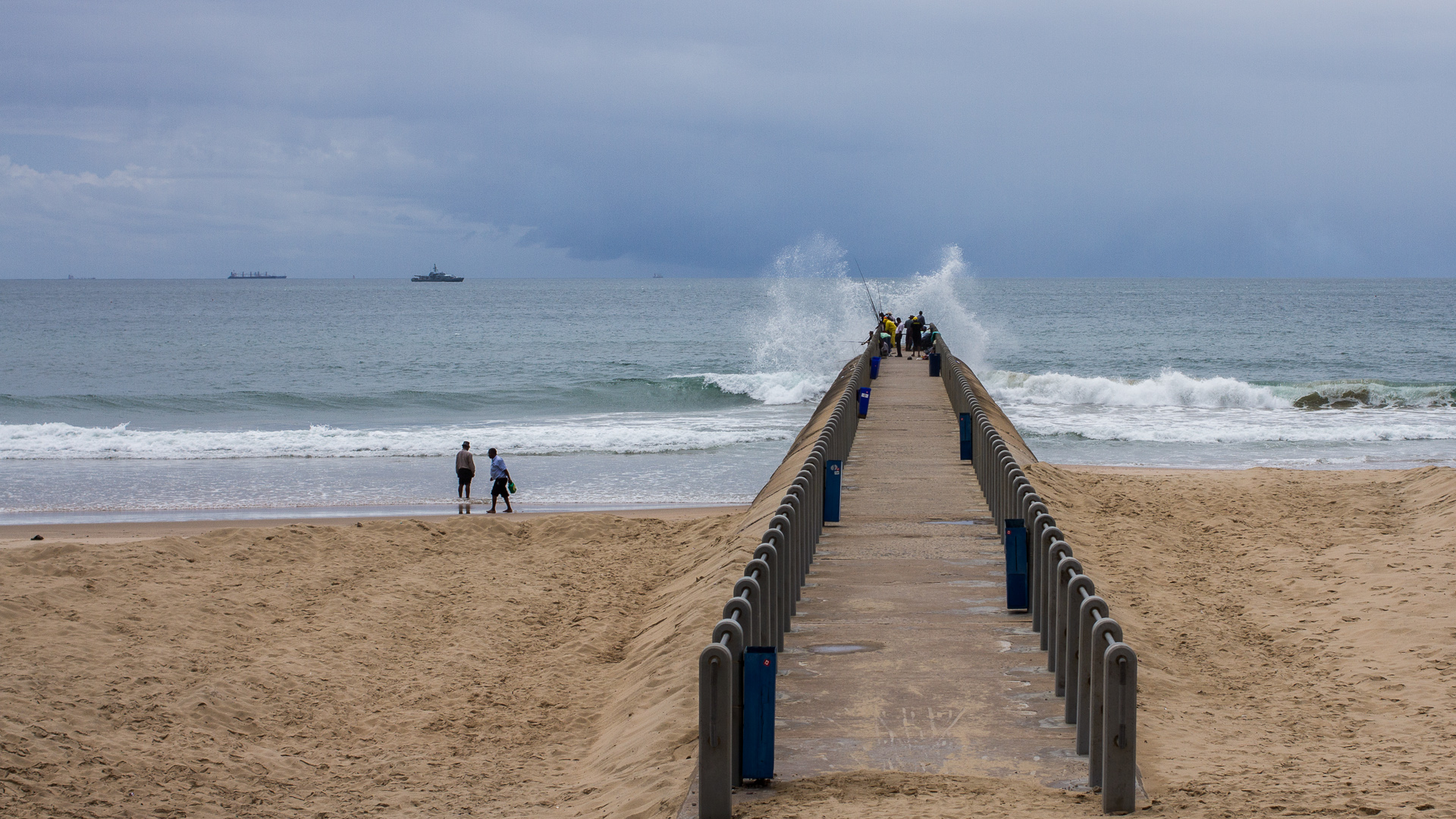
For many viewers, the obvious lead‑in is straight down the pier.
From there, the splash of the wave grabs attention. Then the eye jumps to the two figures on the beach — humans usually win the attention contest.
But the figures aren’t doing anything particularly engaging, so your gaze drifts to the ships… where not much is happening either. Then you follow the horizon back to the wave, down the pier again, and finally out of the frame.
There’s nothing wrong with the photo, but it doesn’t keep the viewer engaged for long. The visual path doesn’t have enough stops along the way.
Example 3 — Jökulsárlón, Iceland

This image is quite different.
The first thing you might notice is the dark, slanted opening in the ice. From there your eye travels down into the shadowed area below, then across the curved shape in the foreground. Suddenly the shape turns into a creature — a frozen “monster” with a jaw, a face, and an eye.
Your eye follows the curve back up to the jagged points on the right, looping you back to the “eye” again. The photograph traps you in a visual circle, pulling you around the frame again and again.
It’s mysterious, intriguing, and rewarding to explore.
Example 4 — Kruger National Park, South Africa
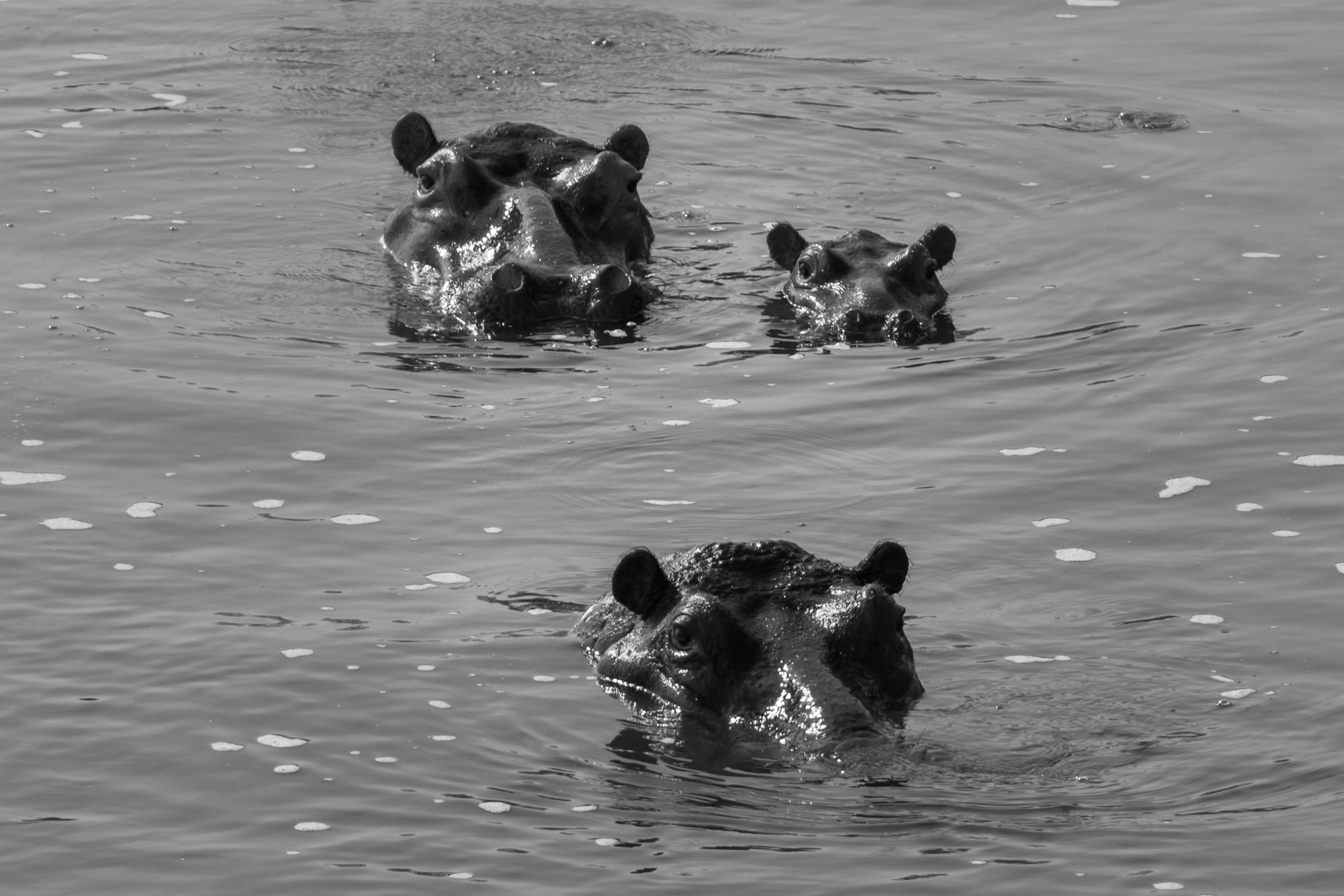
In this family portrait, the journey may start with Mum in the top right — her face is the clearest and carries the most emotional weight. Then your eye shifts to Dad, whose expression seems both protective and wary. Finally, you move up to Junior before looping back to Mum.
This triangular pathway keeps you circulating within the frame, and the expressions invite imagination and emotion. That sense of story keeps the viewer engaged.
How can you lead the viewer’s eye?
When framing your composition, think about how you can arrange elements so the viewer doesn’t escape the frame too quickly. A few tools at your disposal:
Triangular compositions
Three points of interest naturally create a loop. This keeps the viewer inside the frame and moving around the image.
Lines
Leading lines — roads, fences, rivers, shadows — guide the viewer’s eye to a particular area.
Converging lines point towards a subject.
S‑curves lead the viewer gently through the scene.
(Be careful: some lines lead out of the image — a quick exit for the viewer.)
Visual anchors
Faces, hands, bright spots, or strong shapes give the eye something to return to after exploring the details.
Why this matters
When you understand how the eye travels through a photograph, you can use that knowledge to your advantage. You can:
• keep the viewer in the frame longer
• highlight the story you want to tell
• create images that feel more intentional, balanced, and engaging
Every photograph has a path.
Great photographs have a path worth travelling.