Depth of Field
Depth of Field
Here’s a lovely example of shallow depth of field: in this portrait of Sophie, her right eye is perfectly sharp while her left eye is already drifting into softness. That’s how narrow depth of field can be — sometimes only a few centimetres.

What Depth of Field Actually Is
Depth of Field (often shortened to DoF) is simply the area of the photo that appears in focus. You’ve probably noticed that most photos have a zone of sharpness somewhere in the middle, while both the foreground and background appear soft.
It’s surprisingly difficult to get everything in razor‑sharp focus from front to back. Depth of field is affected by three factors you’ve already experimented with:
• Aperture
• Focal length
• Distance to your subject
A general rule:
Longer focal length + wider aperture + closer subject = shallower depth of field.
So if you’re photographing someone with a 55mm lens at f/5.6, and they’re only 1 metre away, you might get only around 7cm of the scene in focus. Eyelashes sharp; ears soft.
When It Goes Wrong (A Painful Lesson)
Some time ago, I made the classic mistake while photographing my sister and brother‑in‑law. I wanted a blurred background, so I shot at f/4 with my 24–105mm lens fully zoomed in. They were about 3m away from me.
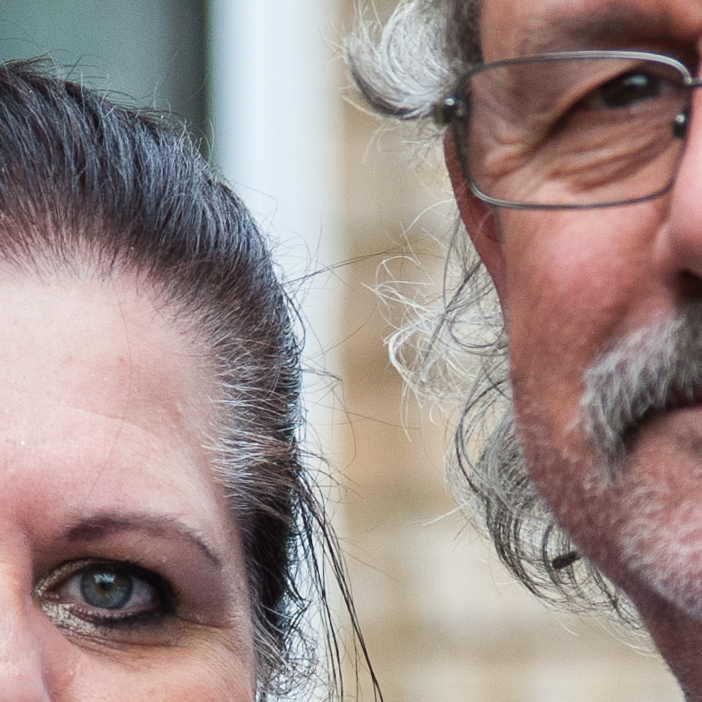
I focused on my sister — all good.
But my brother‑in‑law was standing slightly in front of her. Only a few centimetres.
What happened?
• My sister's eye was perfectly sharp.
• Brother-in-law's hair was sharp.
• His face? Not so much.
I only had about 12cm of usable depth of field — enough to cover “nose to ears”, but not enough for two people standing on slightly different planes.
The solution next time?
Pick a cleaner background so I can afford to stop down to f/8 and increase my depth of field.
How Narrow Can It Get?
Imagine photographing something 1 metre away using an 85mm lens at f/1.4. You might get the subject’s eyeball in focus… but not their eyebrow. That’s how precise shallow DoF can be.
On the other hand:
• A photo taken at 24mm, f/8, with the subject 10m away will have a large zone of acceptable sharpness.
• A subject 20m away, shot with a 50mm lens at f/2.8, will have depth of field deep enough that small differences in distance barely matter.
Distance + focal length + aperture all interact to change the size of the sharp zone.
What About “Bokeh”?
When discussing depth of field, you’ll often hear the word bokeh. This is a Japanese term describing the aesthetic quality of the out‑of‑focus areas, not the amount of blur.
Good bokeh is typically:
• smooth
• creamy
• round‑edged
Some lenses produce more pleasing bokeh than others, thanks in part to the number and shape of their aperture blades. The more rounded the opening, the more rounded the highlights appear.

Bokeh is pronounced bo-keh, a bit like “bouquet” but shorter and with an “eh” at the end.
Depth of field is one of the most expressive tools in photography. Whether you want the tiniest sliver of sharpness or a deep landscape with everything crisp, understanding how aperture, focal length, and distance interact gives you complete creative control.