Composition Rules
Composition Rules
Rule 1: There are no rules.
Truly. Photography is creative, personal, and wonderfully flexible.
But… there are a few guidelines — little tricks that help make images more pleasing, balanced, or emotionally engaging.
Rule 2: Even though there are no rules, this one still applies
Keep your horizons level.
Few things pull a viewer out of an image faster than a tilted horizon. A leaning sea, a wonky skyline — it’s distracting and uncomfortable, as if the whole world is sliding off the frame.
Try to get your horizons level in camera. Many cameras have electronic level displays to help. You can always fix a slight wobble in Lightroom afterwards, but starting level is best.
Non‑Rule 3: The Rule of Thirds
If you place your subject dead‑centre, the photo often feels… well, dead. Moving the subject off‑centre adds energy and interest.
Imagine the frame split into thirds, with two vertical and two horizontal lines creating nine equal blocks. These invisible lines are your guide.
• Place your subject on one of the lines.
• Even better, place key features (like eyes) on one of the intersections.
This applies to horizons too. A horizon placed neatly on the top or bottom third usually feels more balanced than one cutting through the middle.
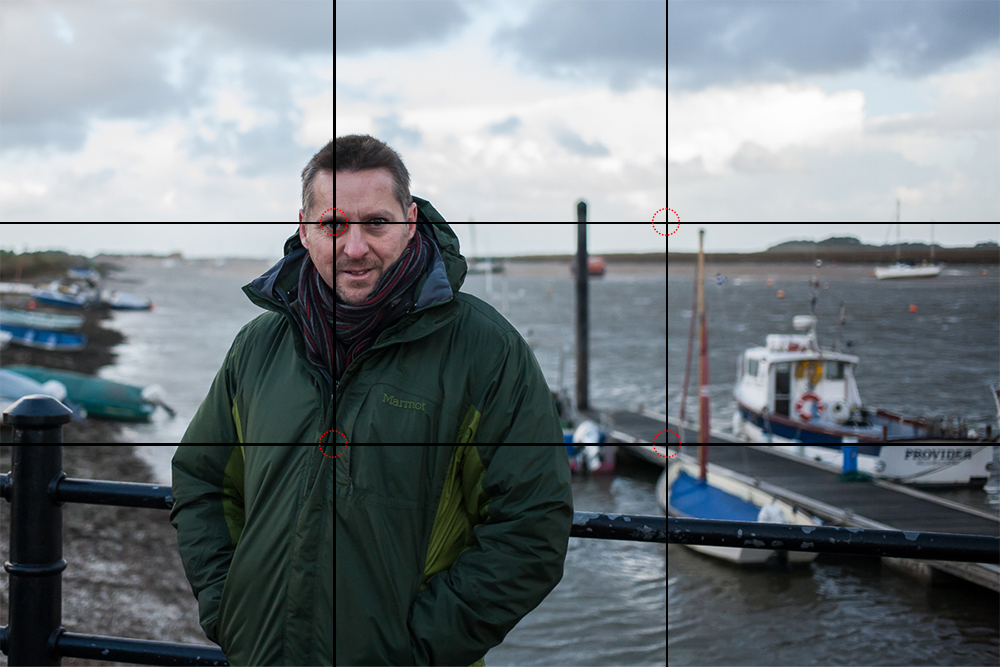
Eyes on a thirds intersection; body and horizon close to thirds lines too.
Non‑Rule 4: Avoid background distractions

A lovely portrait loses its charm when a tree appears to be growing out of your subject’s head. The same goes for lamp posts, signs, stray elbows, or anything that doesn’t add to the story.
Often the solution is simple:
Take one step to the left.
Or ask your subject to step to the right.
Small movements can clean a scene dramatically.
Non‑Rule 5: Space
Space helps guide the viewer and gives your image room to breathe.
5a: Give your subject space to move.
If someone is walking left‑to‑right, place them towards the left of the frame so they have somewhere to “walk into”.
5b: Use negative space.
Leaving some blank space — sky, a plain wall, an open field — creates calm, balance, and emphasis on your subject.

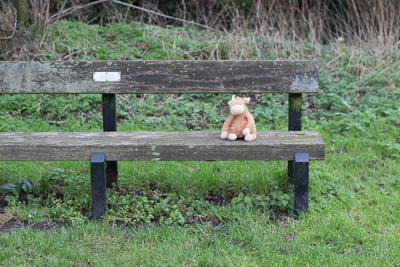
Space to move and negative space helping isolate the subject.
Non‑Rule 6: Get closer
This might seem the opposite of giving space, but getting closer often improves a photo. It removes distractions and makes the subject completely clear.
As the saying goes:

Non‑Rule 7: Be odd
Odd numbers of elements — three birds, five stones, seven flowers — often feel more dynamic than even numbers. Our eyes naturally react well to a bit of asymmetry and imbalance.

These guidelines are not laws. They’re gentle nudges towards stronger, more engaging photos. Use them, break them, adapt them — whatever suits the story you want to tell.