All About the Glass
All About the Glass
While the camera body is a technological marvel, the lens — the glass on the front — is every bit as important, and often far more complex than it looks. Lenses come in all sorts of shapes and sizes. Well… cylindrical shapes, mostly. But you know what I mean: small lightweight lenses, huge white telephotos, plastic budget lenses, solid metal premium ones, zoom lenses, prime lenses, and everything in between. Some are made by the camera brand; others are made by third‑party companies. The variety is endless.
Let’s take a look at what the numbers and letters on your lens actually mean. Go grab one of your lenses and have a look around the front element — that’s where most of the useful details are printed.
Focal Length
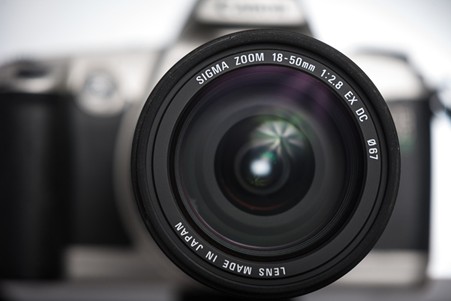 Take this example: **Sigma 18–50mm**.
This tells us two things:
• It’s a zoom lens. The numbers show a range of focal lengths.
• It goes from 18mm to 50mm.
18mm is wide‑angle — great for fitting a lot into the frame.
50mm is close to what the human eye sees naturally, so photos at this focal length tend to feel “normal”.
So this particular lens zooms from wide to normal.
Maximum Aperture
Next up is the aperture. On this Sigma lens, it’s printed as 1:2.8, which is just another way of saying f/2.8. That’s the widest aperture the lens can achieve. A wide aperture lets in more light and gives you a shallower depth of field — lovely blurred backgrounds.
Remember:
You can still set smaller apertures (like f/4, f/8, f/16) using the camera settings, but the lens won’t open any wider than its maximum.
Letters, Letters Everywhere
You’ll also find a bunch of abbreviations printed on most lenses. Some relate to the optical design, coatings, or build quality — interesting to engineers, perhaps, but not always essential for everyday shooting.
But there are some letters worth knowing:
• IS (Canon), OS (Sigma), VR (Nikon), SteadyShot (Sony) — all versions of image stabilisation.
These technologies help reduce blur from slight hand movements. They work surprisingly well, but don’t replace a tripod.
• Other acronyms like USM, STM, HSM, etc. simply describe the autofocus motor. Think of it like car manufacturers using GT or Turbo — a bit technical, a bit marketing.
Filter Thread Size
Look closely at the front of your lens and you’ll see another number, usually next to a small “Ø” symbol. This tells you the filter thread diameter — for example, Ø67mm.
This is the size of filters that screw onto your lens. You might not need filters very often, but when you do, this is the number to note.
Another Example: Canon 70–300mm 1:4–5.6 IS USM
Let’s break this one down:
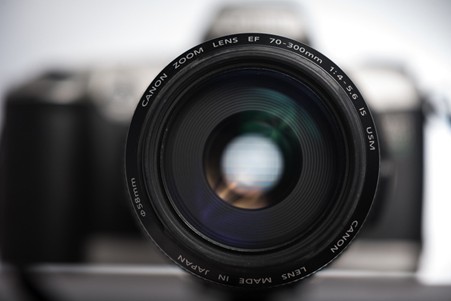 • 70–300mm — a zoom lens that goes from a slightly telephoto 70mm to a powerful 300mm.
• 1:4–5.6 — the maximum aperture changes as you zoom.
• At 70mm, the widest aperture is f/4.
• At 300mm, the widest is f/5.6.
Designing a lens that stays at f/4 all the way to 300mm would make it huge, heavy, and extremely expensive — hence the variable aperture.
• IS — image stabilisation.
• USM — the type of autofocus motor.
• 58mm — the filter thread size.
One More: Canon EF 50mm 1:1.8 II Ø52mm
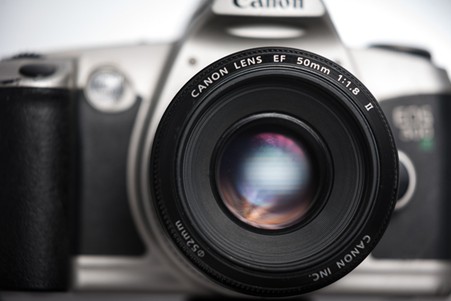
This is the famous “Nifty Fifty”.
• 50mm — a prime lens (no zoom).
• 1:1.8 — maximum aperture f/1.8, nice and bright.
• II — the second version.
• Ø52mm — takes 52mm filters.
A simple lens, but capable of beautiful results.
Lenses are wonderful bits of engineering, and knowing how to read the numbers helps you understand exactly what your lens can do. The more time you spend with them, the more you’ll discover that each lens has its own personality — its own way of seeing the world.