Aperture
Aperture
In everyday English, aperture simply means an opening or a hole. In photography, it means exactly the same thing. Inside your lens is a small diaphragm that changes size. It’s usually wide open, and when you take a photo it closes down to whatever aperture value you’ve chosen.
A quick experiment
Let’s try something hands‑on.
• Put your camera into M (Manual) mode.
• Ignore ISO for now.
• Set the aperture to the biggest number available — anything above f/18 is perfect.
• Set the shutter speed to longer than 3 seconds. (It’ll probably show as something like 3", not 0"3.)
• Now turn your camera around — selfie time! — so you can look down the lens and take a picture.
On some lenses the movement of the diaphragm can be hard to see, especially on smaller or cheaper lenses. So here’s an example of what it should look like:
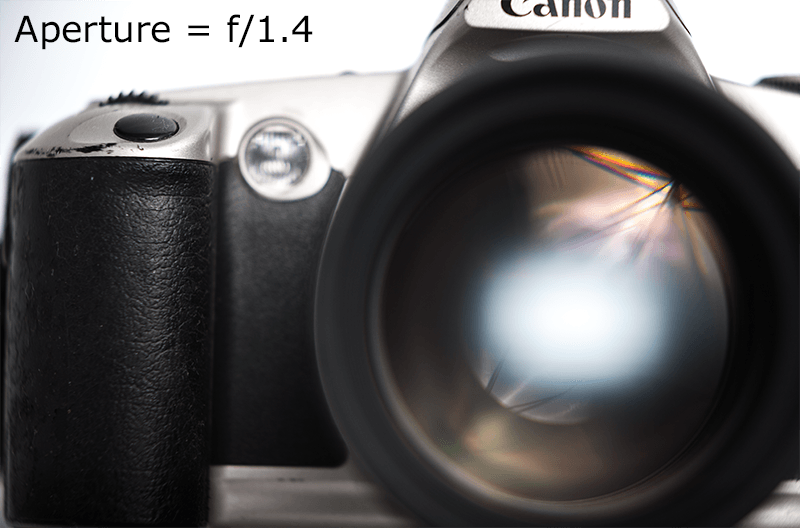
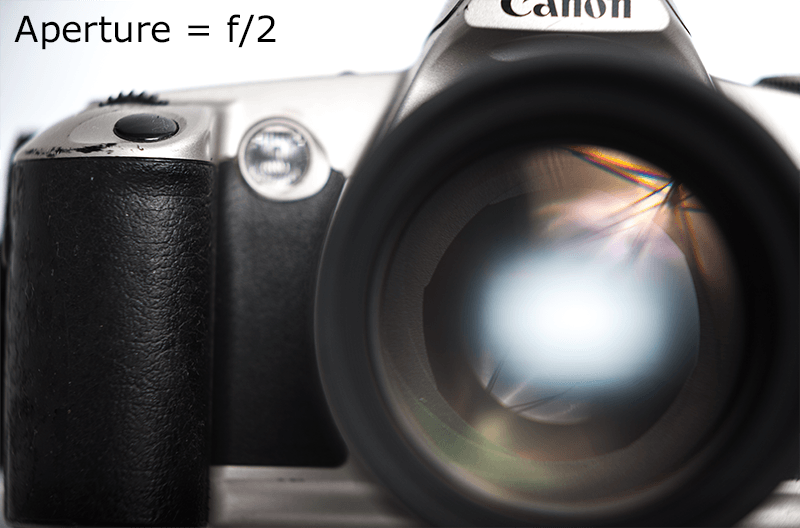
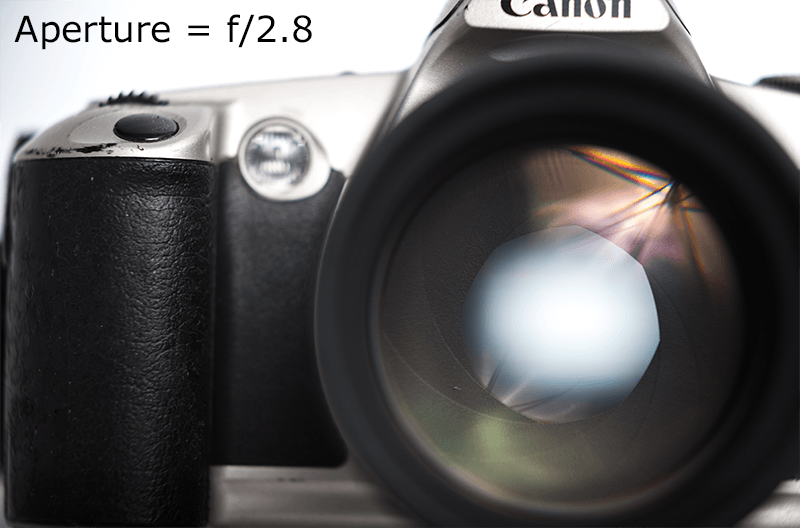
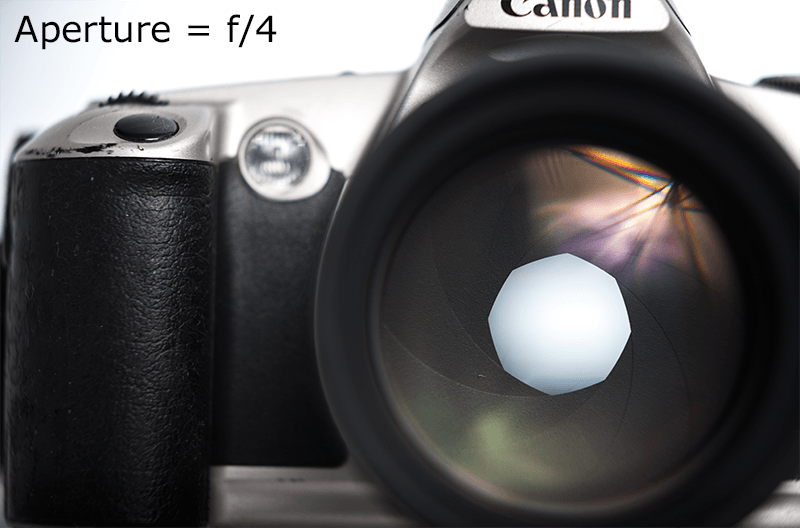
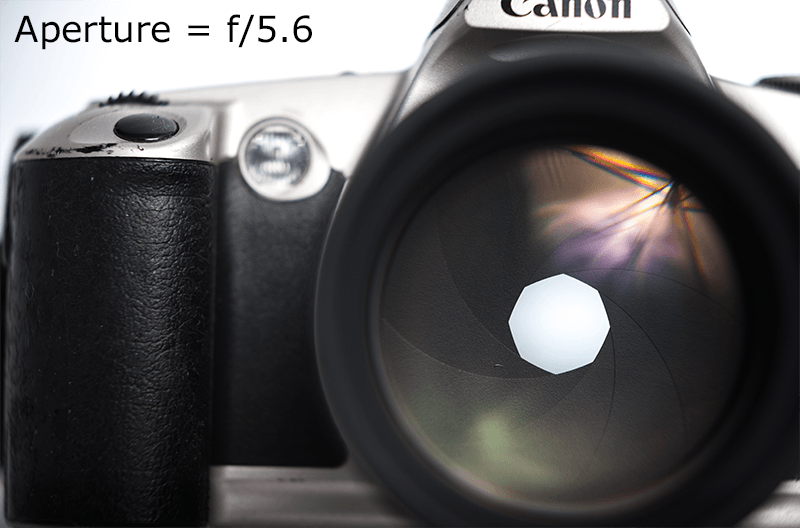
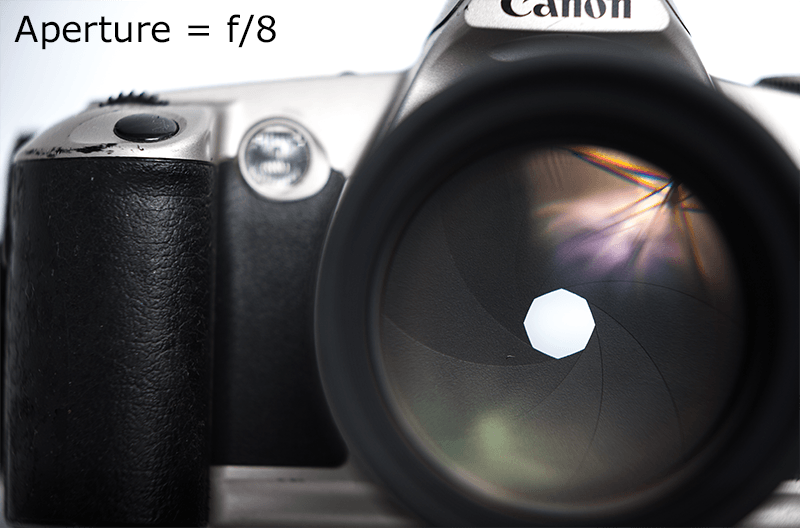
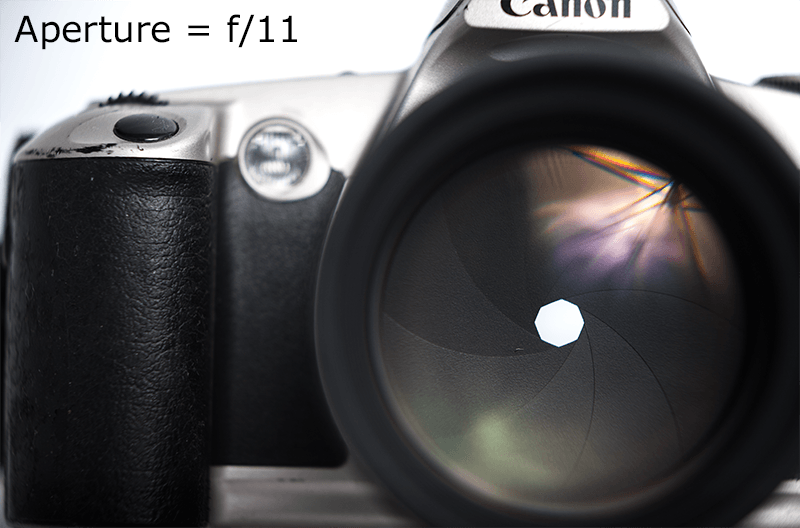
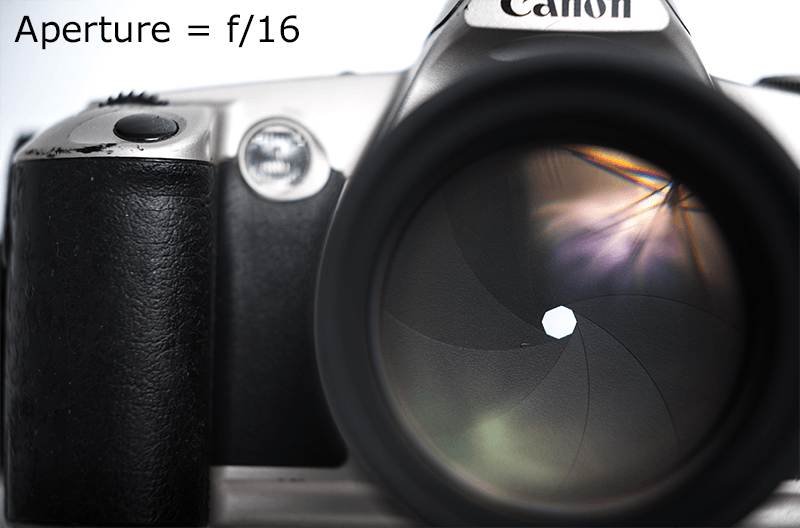
Diaphragm blades at different apertures (examples from a single lens).
At f/1.4, the lens is wide open and you won’t see any blades. From f/4 and smaller openings, the diaphragm becomes much more obvious.
What the aperture numbers mean
Aperture values are technically a ratio: the focal length of the lens divided by the diameter of the opening. More simply, it’s comparing how long the lens is to how wide the front opening can be.
This produces the familiar sequence:
f/2 — f/2.8 — f/4 — f/5.6 — f/8 — f/11 — f/16 — f/22
They’re usually written with an “f/”, but don’t worry too much about why. What is important is this:
• Small numbers (f/2, f/2.8) = big opening
• Big numbers (f/16, f/22) = small opening
It feels backwards at first, but once you accept it, everything becomes simpler.
Let’s practise:
If I ask for a small aperture, you’d say: f/16.
If I ask for the biggest aperture your lens can do, you’ll tell me whatever your lens offers — perhaps f/3.5, or f/1.8 if you’re lucky.
Aperture, light, and cost
A larger aperture (which means a smaller f‑number!) lets more light into the camera. That part is pure physics. Larger maximum apertures also tend to make lenses more expensive, because bigger openings require more complex lens designs.
There are exceptions, though. Canon’s famous “nifty‑fifty” 50mm f/1.8 is both bright and surprisingly affordable at around £100.
The creative trade‑off
Aperture isn’t just about brightness — it’s also a creative tool.
• Large apertures (small f‑numbers) give you a shallow depth of field. Only a thin slice of the image will be in focus, and the background becomes lovely and blurred. Great for portraits or making a subject stand out.
• Small apertures (large f‑numbers) give you a deep depth of field. Much more of the scene appears sharp, which is ideal for landscapes.
So aperture isn’t just technical — it directly shapes how your photo feels. It helps you guide the viewer’s eye and control which parts of the scene matter most.